Adapting the Early Years Environment for Children with Sensory Processing Differences
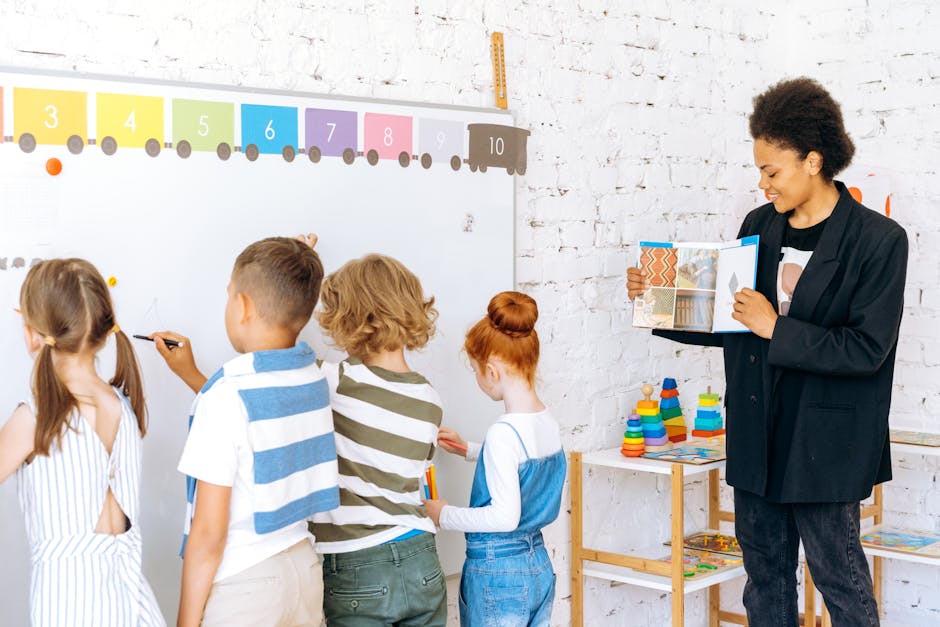
Photo by Mikhail Nilov on Pexels
A three-year-old arrives at nursery and immediately heads for the corner furthest from the door. He puts his hands over his ears before the singing even starts. He refuses to touch the playdough. His key person logs it as "behaviour to monitor" and moves on.
I've seen this play out more times than I can count, in different settings, with different children. And I understand the instinct to frame it as a behaviour concern. But what that child is telling you, loudly and clearly, is that his environment doesn't work for him. He's not being difficult. He's coping.
Sensory processing differences affect a significant number of children in early years settings. Some have a formal diagnosis, like autism or sensory processing disorder. Many don't. Either way, the question is the same: what can we actually do about the space we're working in?
This isn't about having a perfect, purpose-built room with a dedicated sensory suite. Most of us are working with a village hall, a converted terraced house, or a primary school classroom that hasn't been refurbished since 1994. It's about small, deliberate choices that add up.
What sensory processing differences actually look like
Before you can adapt an environment, you need to understand what you're adapting it for. Sensory processing differences don't look the same in every child, and that's what makes this tricky.
Some children are hypersensitive, meaning their nervous system registers sensory input more intensely than typical. Bright lights feel blinding. Background noise is genuinely painful. The seam of a sock can be so distracting it's impossible to focus on anything else. These children often seek to escape, withdraw, cover their ears, or refuse to engage with certain materials.
Others are hyposensitive and actually need more sensory input than the environment is providing. They crash into furniture, mouth objects, seek out tight squeezes, or seem not to register pain the way you'd expect. These children can look impulsive or "naughty" when really their sensory system is just chronically under-stimulated.
The same child can be hypersensitive in one area and hyposensitive in another. A child who can't bear being touched might also seek deep pressure by wrapping themselves in a blanket as tightly as possible. This is why generic "sensory room" checklists don't always cut it. You have to observe the actual child in front of you.
If you're working on a support plan for a child with identified sensory needs, it's worth reading this guide to writing an effective SEND support plan alongside this post, because environment adaptations should feed directly into your planning documentation.
Sorting out the physical space
Lighting is probably the single biggest environmental factor and the one that gets overlooked most often. Fluorescent strip lights are genuinely difficult for many children with sensory processing differences. The flicker (even when you can't see it, it's there) and the harshness can cause real distress. You can't always replace them, but you can supplement. Salt lamps, string lights, and natural light from repositioned furniture all help. I've worked in settings where we simply draped fabric over one end of a bookshelf to create a dimmer zone, and it made a visible difference to several children.
Sound is the next one. Open-plan settings are particularly challenging. The echo of hard floors, the hum of other groups playing, a door slamming somewhere down the corridor. Think about adding soft furnishings: rugs, fabric wall hangings, bookshelves lined with books (which absorb sound). You won't soundproof the room, but you can reduce reverberation. Some practitioners use a white noise machine in a quieter corner, which sounds counterintuitive but works well for children who are distracted by unpredictable sounds.
Clutter is underrated as a sensory issue. Visually busy environments, walls plastered in displays, trays of resources in every colour, toys piled high, can be genuinely overwhelming for some children. I'm not suggesting you strip everything back to bare walls. But try to create at least one visually calm area. Neutral colours, minimal items on display, nothing flashing or moving. Even a corner with a low bookshelf and a couple of cushions counts.
Creating zones that actually work
The idea of a "calm corner" has been around for years, but in a lot of settings it ends up being a token gesture: a beanbag shoved in a corner with a feelings chart on the wall above it. Children use it when they've already hit crisis point. That's not quite what we're aiming for.
What's more effective is thinking about your whole environment in terms of sensory intensity zones. High-intensity areas where movement, noise, and social interaction are expected. Medium-intensity areas for focused play, construction, small-world. Low-intensity areas that are genuinely quieter and visually calmer. Children should be able to move between these freely, not just access the calm space as a consequence of becoming dysregulated.
The low-intensity area should be accessible before things go wrong. I'd suggest not placing it near the door or near any high-traffic route. It shouldn't feel like being put in the corner. Ideally it's slightly enclosed, maybe with a low canopy or bookshelf walls, so children feel held without being confined. A few fidget tools, some tactile objects, a weighted lap pad if you have one, and that's honestly sufficient.
Think about your outdoor space too. If you're planning outdoor sessions, this guide to seasonal outdoor EYFS activities has some good grounding ideas that work well for sensory-seeking children. Natural environments tend to be naturally regulating for a lot of children, but some children find outdoor environments overwhelming for different reasons (wind, unpredictable noise, uneven surfaces). Know your children.
Practical adaptations for common sensory challenges
Tactile defensiveness is one of the most common things I see in early years. Children who don't want to touch playdough, sand, paint, or messy materials. The instinct is to encourage participation, but forcing it makes things worse. Give children agency. Let them use tools: a lolly stick for playdough, a paintbrush rather than hand printing. Offer dry messy play before wet. Put materials in ziplock bags so children can feel the texture without direct contact. Over time, and without pressure, many children will gradually tolerate more direct touch.
Oral sensory seeking, where children mouth objects, chew clothing, or put everything in their mouths well past the typical developmental stage, is often under-addressed. Chewelry (chewable jewellery designed for this purpose) is widely available and genuinely helps. Having a designated chewy tool available removes the need for children to find their own solutions, which are usually your table corners and jumper cuffs.
Proprioceptive seeking, the need for heavy input and deep pressure, shows up as children who crash, push, carry heavy things, or lean on other children in ways that aren't socially appropriate. You can provide legitimate heavy work throughout the day: carrying boxes of books, pushing a wheelbarrow outside, wearing a weighted vest for short periods. These are calming for a lot of children, not just those with identified proprioceptive needs, so building them into your routine benefits the whole group.
Auditory sensitivity during group times is worth thinking about specifically. Carpet time is often a sensory nightmare: unexpected noise, children close together, expectation of stillness. Keep group times shorter. Allow children to sit at the edge with a fidget tool. Don't insist on direct eye contact or facing forward. For some children, sitting behind the group or slightly apart actually helps them attend better, not worse.
Transitions and the sensory challenge nobody talks about
Transitions are one of the most dysregulating parts of any early years day. Going from outside to inside. From lunch to nap time. From free play to a structured activity. The change in sensory environment, temperature, lighting, noise level, is often the thing that tips children over the edge, not the transition itself.
Give five-minute warnings. Use a visual timer if you can. Create a transition object: something the child carries from one space to the next to provide continuity. Some settings use a specific song only played during clearing-up time, which gives auditory predictability. Small things, but they work.
I've found that observing schemas can tell you a lot about how a child is processing their environment. A child who constantly transports objects, who needs to carry things from one place to another, might be managing transitions through that schema. If you're not familiar with schemas and how they connect to sensory behaviour, this post on schemas in early years is worth a read.
Documentation matters here too. If you're noticing patterns in when and how a child becomes dysregulated, write it down. Time of day, which activities preceded it, what the sensory environment was like. This information is invaluable for any SEND support planning, for conversations with parents, and for referrals to occupational therapy if you're heading that route.
Working with parents
Parents of children with sensory processing differences are often exhausted and sometimes defensive. They may have been told repeatedly that their child is "just a bit sensitive" or that it's a parenting issue. Come to conversations with specifics, not generalisations. "I've noticed that Charlie finds it very difficult to settle when there's a lot of background noise. Here's what I've tried and what seems to help him" is a completely different conversation from "Charlie has sensory difficulties."
Sharing strategies is important. If a weighted blanket helps at nursery, it might help at home too. If a visual schedule reduces anxiety in the morning session, parents can use the same approach to support the home-to-setting transition. Consistency between environments makes a genuine difference.
If you're communicating updates home regularly, writing something parents will actually engage with is its own skill, but for individual children with sensory needs, a brief weekly note or end-of-day message about what's worked tends to land better than waiting for a formal review meeting.
And be honest about what you don't know. Sensory processing is a specialist area. If a child's needs are significant, an occupational therapist assessment is the gold standard. You don't have to have all the answers. Your job is to create a space where the child can function, learn, and feel safe, and to advocate for further support when the child needs more than you can provide.
The truth is, most of the adaptations that help children with sensory processing differences help all children. Lower lighting is more comfortable for everyone. Clear zones reduce chaos for the whole group. Predictable transitions reduce anxiety across the board. You're not creating a special programme for one child. You're making good early years practice more intentional. That's worth doing regardless of who's currently on your register.
Save hours on planning and paperwork
EduNest helps childminders, nurseries, and teachers with EYFS planning, progress checks, and more. Try it free.
Get Started FreeRelated articles
Working with External Agencies in SEND: A Practical Guide for Early Years Settings
Navigating external agency involvement for children on your SEND register is rarely as simple as it looks on paper — referral processes shift between local authorities, waiting lists run long, and professional communication often falls short. This guide cuts through the complexity, covering who you're likely to be working with, how to approach referrals effectively, and how to make specialist input count in your day-to-day practice.
How to Write an Effective SEND Support Plan: A Step-by-Step Guide for Early Years Practitioners
Many practitioners find that writing a SEND support plan is straightforward enough until they actually sit down to do it — then the blank page has a way of making everything feel uncertain. This guide works through the process in practical terms, grounded in what genuinely helps children rather than what satisfies a checklist.