
Understanding Schemas in Early Years: How to Observe and Extend Children's Repeated Play Patterns
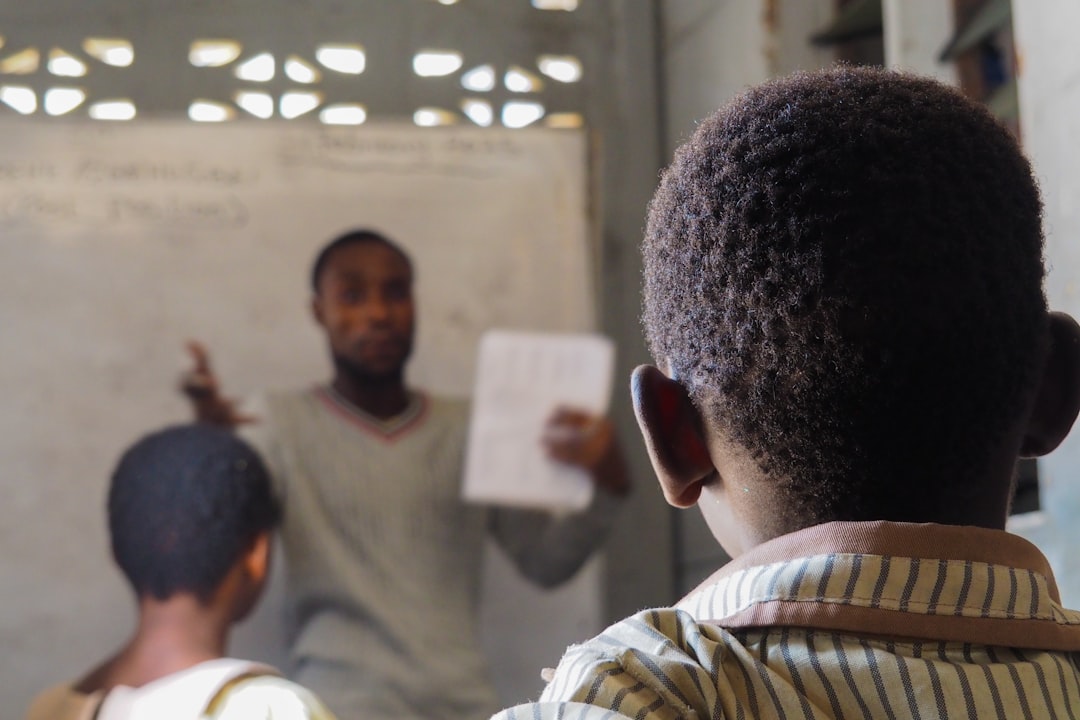
Photo by Kahar Erbol on Unsplash
If you've ever watched a two-year-old spend forty minutes moving objects from one end of the room to the other for no apparent reason, you've witnessed a schema in action. Or maybe you've had a child who wraps absolutely everything in fabric, fills every container they can find, or spins the wheels on every toy car before anything else. None of this is random. It's children doing exactly what their brains need them to do.
Schemas are repeated patterns of play and behaviour that children use to build their understanding of the world. The concept was originally developed by Jean Piaget, but it was Chris Athey's groundbreaking research at the Froebel Institute in the 1970s and 80s that really brought schemas into early years practice. Her book Extending Thought in Young Children is still worth reading if you haven't already.
The thing is, schemas can look like chaos to someone who doesn't know what they're seeing. A child tipping every bucket of sand onto the floor isn't being destructive. A child climbing on every available surface isn't just pushing boundaries. They're running the same cognitive programme over and over because repetition is how young children consolidate learning. Once you start recognising schemas, you can't stop seeing them.
The Most Common Schemas You'll See
There are quite a few named schemas, but some come up far more often than others in practice. Knowing the common ones makes observation a lot easier.
Transporting is probably the one most practitioners notice first, because it involves a lot of movement and mess. Children carrying objects from one place to another, filling bags and boxes, pushing things in prams or trucks. I had a child in my setting last autumn who spent weeks putting small animals into a lunchbox, carrying them to the other side of the room, tipping them out, and starting again. Over and over. His key person initially worried it was perseverative behaviour, but once we identified it as transporting schema, we could see he was deeply engaged and learning about containment and journey.
Rotation shows up as a fascination with anything that turns: wheels, spinning tops, mixing spoons, windmills. Children working through rotation schema often love rolling down hills, spinning themselves around, and stirring paint to watch it swirl. One of the best additions to a rotation-heavy group I've worked with was a collection of old bicycle wheels fixed at different heights so children could spin them freely. Cheap and endlessly used.
Enclosure and enveloping are closely related. Enclosure is about surrounding things (arranging blocks into pens, drawing circles around drawings, building dens). Enveloping is about covering or wrapping, including themselves. Children in this schema wrap objects in fabric, bury things in sand, cover their own hands with paint. It can look like mess-making, but there's clear intent behind it.
Trajectory is the schema that tests practitioners' patience most, honestly. Throwing, dropping, kicking, pushing things off tables. Children working with trajectory are fascinated by the path objects take through space. They need to do this. The key isn't to stop it but to give it appropriate outlets: balls, ramps, water play, throwing beanbags at targets.
Others worth knowing include connection (tying things together, building and demolishing), positioning (lining things up, arranging objects precisely), and transformation (mixing, changing states, adding ingredients). Most children don't stick rigidly to one schema. They often work with two or three overlapping ones across a period of weeks or months.
How to Observe Schemas Properly
Noticing a schema isn't the same as understanding it. You need to observe over time, not just in a single session.
The most useful approach is to track what a child does across the whole day, not just during child-initiated time. Does the same pattern appear at the dough table and in the outdoor area? Does it show up in the way they eat their snack (always pushing things to the edge of their plate, perhaps)? Schema behaviour tends to be persistent and cross-context. That persistence is your clue.
I'd suggest keeping a simple running note for any child where you think you're seeing a schema. Not a formal document, just a notepad or phone note. Jot the date, what you observed, and where. After two weeks you'll start to see patterns that weren't obvious at first. You might initially think a child is interested in trains. Then you realise it's not trains specifically, it's the track. And the guttering outside. And the line of shoes by the door. That's trajectory or positioning revealing itself gradually.
Talking to parents and carers is genuinely important here, not just good practice. Parents often report the same schema showing up at home without knowing that's what it is. "She puts everything in her bag before she'll leave a room." "He always wants to stir his food even after it's been mixed." These home observations add context you can't get from a setting alone, and parents often feel more seen when you can explain their child's behaviour in a way that makes it make sense.
One thing I'd caution against is over-labelling. Not every repeated behaviour is a schema, and not every child needs to be categorised. Sometimes a child likes spinning because they like how it feels, not because they're deep in a rotation schema. Use schemas as a lens, not a diagnosis.
Extending Schema Play Without Taking Over
Once you've identified a schema, the instinct is often to plan an activity specifically for it. That can work, but it's easy to overstep and turn child-led exploration into a practitioner-directed task. The best schema support is usually environmental: putting the right resources in the right places and then getting out of the way.
For a child in a transporting schema, think about what you're putting in the environment. Are there containers of different sizes and materials? Bags, baskets, buckets, bowls? Natural loose parts to fill them with? Ramps or paths that give purpose to the carrying? You don't need to set up a special "transporting activity." You need to make sure the environment gives that schema room to breathe.
Language matters too, but it needs to be in the moment. When a child is loading a wagon with conkers, naming what they're doing ("You're filling it up, aren't you?") or extending their thinking ("I wonder how many we can fit?") adds cognitive scaffolding without interrupting the flow. The key is being responsive rather than directive. Follow their lead, always.
Books can be a lovely way to connect with schemas outside of active play. For trajectory schema, something like Whatever Next! by Jill Murphy has a child going up and coming back down, a clear trajectory arc. For enclosure, The Tiger Who Came to Tea takes place entirely inside a domestic space. You don't need to make the connection explicit to the child. The resonance is there.
Outdoor provision matters enormously here. Many schemas, especially trajectory and transporting, are easier to support outdoors where scale and movement are possible. If your outdoor space is limited or restrictive, it's worth thinking about how to create loose parts areas, ramps, or digging spaces that give schema-driven play more room. Schemas don't respect the indoor/outdoor divide.
Schemas and the EYFS
Schemas sit naturally within the EYFS framework, though the word "schema" doesn't appear in the framework itself. What you're looking for in Development Matters and Birth to 5 Matters is the acknowledgement that children learn through repeated, self-initiated action. The playing and exploring and active learning characteristics are all describing schema behaviour, essentially.
For observation and assessment purposes, identifying a schema gives you a thread to pull. A child working through enclosure schema over several weeks is building understanding of space, size, boundary, and containment. Those connections feed into maths, literacy (story maps often rely on spatial boundary concepts), and personal, social and emotional development as children experience the satisfaction of completing their schema loop.
Ofsted won't ask you to name every child's schema, but they will want to see evidence that you know your children well and plan in response to their individual interests. A schema observation is one of the most coherent ways to demonstrate that. It shows that you're not just reacting to surface behaviour but understanding the learning underneath it.
That said, I'd push back slightly on the tendency to turn schema observation into bureaucratic box-ticking. The value of understanding schemas is in what you do with that understanding, not in how neatly you can record it. I've seen settings produce beautiful documentation of schemas and then not change their provision at all. The documentation isn't the point.
When Parents Don't Get It
This is worth addressing directly because it comes up all the time. A parent sees their child tipping sand, or throwing things, or wrapping toys in paper, and they're worried. Either they think their child is being naughty or they think something is developmentally wrong.
The schema framework gives you a genuinely useful way to have that conversation. "We've noticed that Jayden is really interested in carrying things at the moment, which is actually a recognised pattern of learning called a transporting schema. It means he's exploring ideas about movement and space. We're supporting that by giving him containers and natural materials to carry." That's a confident, informed response that helps the parent understand and feel reassured.
Be honest with parents that schemas can look messy or repetitive. That's not a bug in the system. That's how it works. Children need the repetition. They're not going to do it three times and move on. They're going to do it for weeks. Parents who understand this tend to be much more patient, both at home and in the setting.
It's also worth mentioning to parents that they can support schemas at home without doing anything elaborate. A child in enveloping schema doesn't need an expensive play kit. They need access to fabric scraps, a few boxes, and permission to do what they're already doing. Simple as that.
If you're new to schemas, the best starting point is just to pick one child and watch them for a week without intervening. Write down everything you notice. By the end of the week you'll either see a clear pattern or you won't, but either way you'll have spent more focused time observing that child than you probably would have otherwise, and that observation itself is valuable. From there, adjusting your provision to respond is usually more straightforward than it sounds, because you're working with what the child is already telling you they need.
Save hours on planning and paperwork
EduNest helps childminders, nurseries, and teachers with EYFS planning, progress checks, and more. Try it free.
Get Started FreeRelated articles
Behaviour as Communication: Understanding and Responding to Challenging Behaviour in Early Years Settings
When a child throws a toy or screams for twenty minutes over the wrong-coloured cup, the instinct is to manage the behaviour — but that misses the point entirely. This article explores why treating behaviour as communication, rather than defiance, is the shift that transforms how early years practitioners respond to even the most difficult moments.

Speech and Language Milestones: A Practical Guide for Early Years Practitioners in the UK
Early years practitioners are often the first to notice when a child's speech and language development isn't quite following the expected path — but knowing what's typical, what warrants concern, and how to navigate referral pathways isn't always straightforward. This guide sets out the key milestones clearly and gives practitioners something practical to act on, whether they're supporting a child in the setting or talking to a worried parent.