How to Plan EYFS Activities Around the Seven Areas of Learning
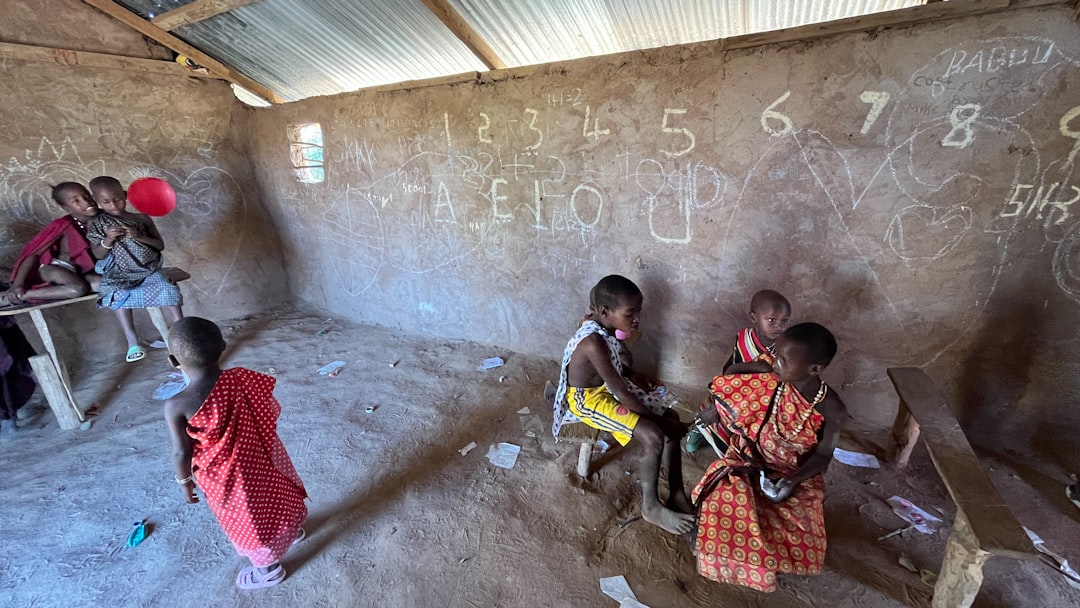
Photo by Antoine Demare on Unsplash
Planning EYFS activities can feel overwhelming, especially when you're trying to cover all seven areas of learning while also keeping children genuinely engaged. I've been there, staring at a blank planning sheet on a Sunday evening, wondering how to make the week feel purposeful without it all becoming a box-ticking exercise.
The seven areas of learning aren't meant to be tackled in isolation. Once you understand how they connect, planning becomes a lot more manageable, and the activities you plan start to feel less like curriculum delivery and more like good early childhood practice.
The Prime Areas Come First, and There's a Reason for That
The EYFS splits learning into two groups: the three prime areas and four specific areas. The prime areas come first because they underpin everything else. A child who struggles to regulate their emotions, communicate their needs, or move confidently through space will find the specific areas much harder to access. This is especially true in the early years and for children under three.
Communication and Language, Personal, Social and Emotional Development (PSED), and Physical Development aren't just three boxes to tick on a planning document. They're the foundation. When I plan for a child who's new to the setting or still developing their spoken English, the prime areas shape every activity I offer them, long before I start thinking about phonics or number.
That said, the specific areas (Literacy, Mathematics, Understanding the World, and Expressive Arts and Design) matter enormously, and they're often where you see children really come alive when the activities are well chosen. The trick is knowing how to link them.
Planning Activities That Cover Multiple Areas at Once
The most efficient planning approach, and honestly the most enjoyable one to deliver, is designing activities that naturally touch several areas at the same time. Good early years practice rarely looks like "now we're doing maths, now we're doing literacy." It's more layered than that.
Take a simple autumn nature walk. Children are physically active (Physical Development). They're talking about what they see, using new vocabulary like "conker" or "frost" or "decomposing" (Communication and Language). They're noticing seasonal changes and asking questions about the natural world (Understanding the World). If you follow it up with mark-making back in the setting, perhaps drawing a leaf or writing a label for their collection, you've brought in Literacy without it feeling forced. Group up the children to sort their finds by size or colour and you've got Mathematics too.
One activity. Multiple areas. No contrivance.
This kind of planning is what Development Matters refers to when it talks about practitioners making connections across learning. You don't need a separate "maths session" and a separate "science session." You need well-designed experiences that are rich enough to open doors.
How to Plan for Each Area Without Losing Your Mind
Here's the practical side. When I sit down to plan, I don't start by listing the seven areas and trying to slot activities into each one. I start with what the children are currently interested in, what season we're in, what's coming up for the group, and what gaps or next steps I've noticed from observation. Then I work outward.
Let's say a group of three and four year olds is obsessed with superheroes right now. That interest is the hook. From there:
- Communication and Language: Storytelling, creating superhero characters, discussing powers and problems to solve. Role play that involves negotiating roles and narrating action.
- PSED: What makes someone a hero? Talking about helping others, managing big feelings (superheroes get scared too), taking turns in play.
- Physical Development: Obstacle courses, "training" activities, large muscle movement, fine motor work like making capes or designing logos.
- Literacy: Simple superhero story maps, labelling characters, writing (or mark-making) a superhero's special powers on a card.
- Mathematics: Counting obstacles in the course, measuring "how far" a superhero can jump, sorting equipment by size or colour.
- Understanding the World: Where did the idea of superheroes come from? Looking at different cultures' heroes and legends. Simple cause and effect: what happens if you mix these colours to make a superhero costume?
- Expressive Arts and Design: Designing and making props, painting or collaging characters, creating a superhero theme tune.
That's a whole week of connected, purposeful activity, all spinning out from one interest. And the children are invested because it starts with something they care about.
I'd always suggest starting with the children rather than starting with the framework. The areas of learning are a lens for planning and assessment, not a recipe.
The Areas Practitioners Often Underplan
Understanding the World and Expressive Arts and Design tend to get the least attention in settings I've visited or spoken to other practitioners about. Understanding the World in particular often gets reduced to a science experiment once a fortnight, which doesn't do it justice at all.
Understanding the World covers past and present (which includes children's own family histories and cultural backgrounds), people, culture and communities, and the natural world. That's a broad brief. A conversation with a child about what their grandma cooks for dinner, or a look at photographs of the setting from ten years ago, absolutely counts. So does planting seeds, observing mini-beasts, talking about what a mosque or a church is for, or comparing their own home to a character's home in a book.
Expressive Arts and Design is the one I personally love most. It's where you see children processing their experiences and making meaning in ways they can't always do through words. A four year old who spent a morning painting over and over in dark colours, layering brown and grey and black, was working something out. We talked quietly about it at the end of the session. His grandad had died two weeks earlier. The paint was doing something that words weren't ready to do yet.
Don't reduce Expressive Arts to craft activities with a fixed outcome. Real creative expression is open-ended. It's messy. It doesn't always look like much. That's fine.
A Note on the Specific Areas for Older Children
As children move into Reception, the balance naturally shifts and the specific areas carry more weight. Literacy and Mathematics in particular become more prominent, and that's appropriate given the transition to Key Stage 1 ahead. But even in Reception, the prime areas never disappear. A child who's anxious or struggling to make friends isn't going to access phonics well. Ofsted inspectors understand this. Good early years practice keeps both in view throughout the EYFS.
Birth to 5 Matters is a useful companion here, especially if you work with younger children and want a more detailed breakdown of where children tend to be and what to plan for next. It's not statutory, but it's grounded in good early childhood knowledge and I've found it more practically useful than Development Matters for planning with babies and toddlers.
Keeping Your Planning Manageable Week to Week
I've worked in settings that had twelve-page planning documents. I've also worked in settings where the lead practitioner planned on a single A3 sheet and produced consistently brilliant provision. The paperwork isn't the point.
What matters is that the adults in the room know what they're doing and why. That means having a clear idea of: what the key experiences are this week, which children have specific next steps you're holding in mind, and how the environment is set up to provoke learning without constant adult direction.
In my experience, the most effective weekly planning includes three things. First, a small number of focus activities that are intentionally designed and linked to identified next steps. Second, continuous provision that's refreshed and set up to invite exploration across the areas. Third, some flexibility, because the best learning moments often happen when a child spots a snail on the path and the whole morning shifts.
Rigid planning that leaves no room for the unexpected misses a lot of what makes early years so valuable. Children are phenomenally good at telling you what they need, if you're watching and listening.
One practical tool worth having is a simple grid that maps your key activities against the seven areas for the week. Not to prove you've covered everything, but to spot the gaps. If you look at your week and notice you haven't planned anything that stretches children's physical development or Expressive Arts, you can adjust before the week starts rather than noticing it on Friday afternoon.
Plan with the children, not just for them. If you debrief at the end of each day, even informally, and ask yourself what captured them and what fell flat, your planning improves quickly. You start to see patterns. You get better at reading your group.
The seven areas of learning are a genuinely useful map. But the children are the territory. Keep your eyes on them first, and the planning tends to follow.
Save hours on planning and paperwork
EduNest helps childminders, nurseries, and teachers with EYFS planning, progress checks, and more. Try it free.
Get Started FreeRelated articles
Seasonal EYFS Activity Planning: A Month-by-Month Guide for Childminders
The seasons give childminders a ready-made planning framework that children genuinely respond to — cold air, wet leaves, and conkers from the park beat any bought resource hands down. This month-by-month guide helps you plan ahead, link activities to the seven EYFS areas of learning, and stop reinventing the wheel every term.