
How to Plan Differentiated Lessons for Mixed-Ability KS2 Classes
Photo by alam kusuma on Unsplash
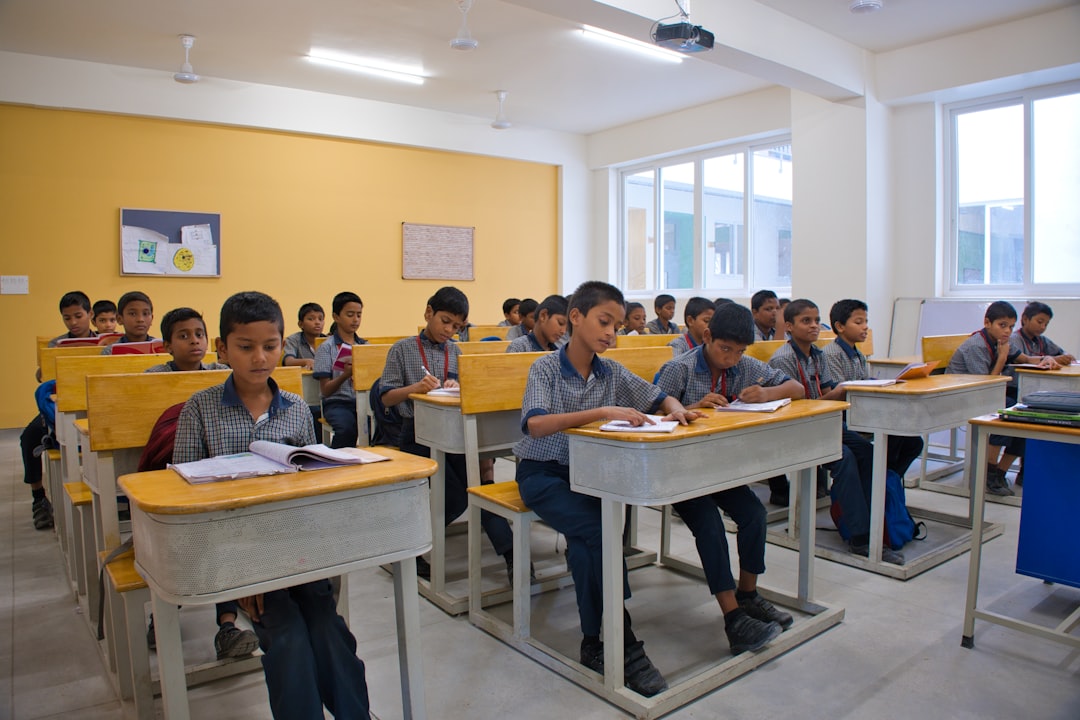
Mixed-ability KS2 classes are the norm, not the exception. Most primary teachers I know are standing in front of thirty children who span at least four or five distinct attainment levels on any given day, and the idea that you can teach them all the same thing in the same way and expect it to land equally is, frankly, a fantasy. The question isn't whether you need to differentiate. It's how to do it without spending every Sunday writing five different versions of the same worksheet.
I've been teaching Year 5 for the better part of a decade, and I've tried most approaches going. Some of them work brilliantly. Others are elaborate in theory and useless in practice. What follows is the honest version of how differentiation actually functions in a real classroom, not the polished version you'd write for an Ofsted deep dive.
What differentiation actually means (and doesn't mean)
There's a persistent myth that differentiation means producing separate tasks for different groups. The three-sheet approach, the ones labelled with coloured dots or mild/spicy/hot or whatever euphemism your school uses this year. I understand why it exists. It's visible, it's auditable, and it looks organised. But it also consumes enormous amounts of planning time and, more importantly, it tends to lock children into ability groups in ways that are hard to shift.
Real differentiation is more about how you teach than what you print. It's adjusting your questioning on the fly. It's knowing that Amara needs the concrete manipulatives before the abstract number sentence, while Josh has already grasped the concept and needs a problem that makes him think sideways. It's offering choice rather than assignment.
That said, some tasks genuinely do need to look different for different children. A child who is still developing basic multiplication facts cannot access the same long division problem as one who finds it straightforward. The skill is knowing when to differentiate the task itself and when to differentiate your support and questioning instead.
Starting with what you actually know about your class
Planning differentiation without assessment data is guesswork dressed up as pedagogy. Before you can sensibly adjust anything, you need a clear picture of where your children are. That doesn't mean endless formal testing. It means using what you've already got: end-of-unit assessments, recent marking, your own running notes, and the things you notice when you're circulating the room.
I keep a simple spreadsheet (nothing fancy, just a tab per subject) where I note down who's secure, who's still developing, and who's exceeding expectations on each key concept. It takes about ten minutes to update after an assessment. When I'm planning the next unit, I open that tab first, before I touch any scheme of work. It means my planning is responsive to this class, this term, rather than being a recycled plan from three years ago with the names changed.
The thing is, attainment doesn't stay fixed. Children who are struggling with fractions in September might be flying by February once something clicks. Keep your assessment picture live and update your groupings accordingly. Flexible grouping, where children move between groups depending on the topic rather than being assigned to a fixed group for the year, is one of the most effective things you can do for children who might otherwise get stuck at a ceiling.
For children with identified SEND needs, your starting point is their support plan. If you're not already familiar with how to write and use those documents effectively, the guide on writing effective SEND support plans is worth reading even if you're working in KS2, because the principles translate across phases.
Practical strategies that actually reduce your workload
Let's get specific. The approaches below are ones I've used regularly, and they all have something in common: they don't require you to produce triple the planning in half the time.
Open-ended tasks with natural differentiation built in. A question like "In how many different ways can you make 360?" has no ceiling. Children at the early stages might work with simple addition. Others will start exploring multiplication, factors, or even algebraic thinking if they're ready for it. You set one task. The differentiation happens through the children's own engagement with it. These tasks take some thought to design, but once you've got a bank of them, you'll use them repeatedly.
Tiered success criteria. Rather than three different worksheets, give the whole class the same task but write success criteria at two or three levels. "Bronze: I can identify the features of a persuasive text. Silver: I can write a persuasive paragraph using at least two techniques. Gold: I can independently write a full persuasive piece and explain my choices." Every child is working toward the same learning goal. The level of independence and complexity varies. This is significantly less work to prepare than separate tasks and it avoids the self-esteem issue of children knowing they've been handed the "easy" sheet.
Scaffolding as a choice, not an assignment. Put the word banks, sentence frames, and worked examples on the table and let children decide whether they need them. You'll be surprised how often children self-select accurately, and how much better they feel about using support when they've chosen it rather than been assigned to it. Children who don't need scaffolding won't bother picking it up. Children who do need it often won't if they're embarrassed about being in the group that "needs help."
Targeted questioning during whole-class input. This is where differentiation happens most naturally and most effectively. When you're doing carpet input, you know which children need the basic recall question and which ones need the "what would happen if..." version. You don't need to announce it. Just direct your questions accordingly. Ask Connor to explain his reasoning in a way that pushes his thinking. Ask Ruby a question you know she can answer successfully, and then build from there. Cold calling works well here if you've built a classroom culture where wrong answers are normal and expected.
Pre-teaching for children who need it. Instead of always scaffolding during or after the lesson, try pre-teaching key vocabulary or concepts to children who find the material harder. Ten minutes at the start of the day, or during a registration activity, spent introducing the main idea before the lesson proper. Those children arrive at the lesson having already had a first encounter with the content. They're not starting from zero. In my experience, this works better than any amount of extra support during the lesson itself because it removes the gap before it forms.
Managing differentiation across subjects without burning out
Here is where I have to be honest: you cannot fully differentiate every lesson every day without it becoming unsustainable. Teachers who try to do this end up exhausted by October half-term. The solution is to prioritise.
In writing, for instance, I tend to differentiate heavily because the range within a class is usually dramatic and the one-size approach genuinely doesn't work. In a foundation subject lesson where the content is more accessible and the main goal is broadening knowledge, I might do very little formal differentiation beyond my questioning. Knowing where to concentrate your effort is a professional judgement, not a failure to meet some imaginary standard.
It's also worth being realistic about your teaching assistants. If you're lucky enough to have TA support, how you deploy them matters enormously. The traditional model of a TA sitting with the lowest-attaining group the entire lesson is well documented as being counterproductive. Children in that arrangement get more adult-dependent, not less. A more effective approach is for your TA to float and target support during the main activity, while you take a small guided group for focused teaching. Or have them pre-teach the next lesson's vocabulary to a group who need it, while you run the lesson for the rest of the class.
Planning for differentiation also gets easier when you're working from a coherent, well-sequenced curriculum where you know exactly what children need to know before the next step. If your scheme of work doesn't give you that clarity, it's worth mapping it out yourself, at least for the core subjects. Knowing the prerequisite knowledge for each unit means you can quickly identify which children are missing a foundational piece, rather than wondering why they're stuck at the surface level.
The workload question is real and it doesn't have a magic answer. But building a bank of reusable open tasks, investing time in flexible success criteria templates, and being systematic with your assessment tracking will all pay dividends over time. The first half-term of doing things differently is the hardest. After that, it becomes habitual.
A note on the children who don't fit the pattern
Every class has children who are genuinely hard to plan for. The child who is significantly ahead of their year group in mathematics but struggles significantly with writing. The child who can discuss complex ideas verbally but finds the written output almost impossible. The child whose attainment fluctuates depending on factors you can't always predict or control.
For these children, differentiation has to be more bespoke, and it usually involves conversations with the child themselves. I've found that asking children directly what helps them learn is both informative and surprisingly accurate. A Year 4 child who tells you "I get stuck when there are too many words on the page" is giving you useful information. Act on it.
If you have children with EHCPs or significant additional needs, their documentation should be guiding your planning anyway. If it isn't, or if you're not sure how to use it effectively, that's worth raising with your SENCO. The support planning process exists precisely to prevent children from falling through the gaps that whole-class planning inevitably creates.
The goal of differentiation, when it's working, is that every child in your class leaves the lesson having learned something they didn't know when they came in, and feeling reasonably confident in their own ability to do so. That's it. It doesn't require colour-coded ability groups, laminated task mats for every lesson, or a separate planning document for each attainment level. It requires that you know your children, stay curious about what they understand, and adjust what you're doing based on what you're seeing.
Start with your assessment data. Pick one lesson this week to try tiered success criteria instead of tiered tasks. Notice what happens. Build from there.
Save hours on planning and paperwork
EduNest helps childminders, nurseries, and teachers with EYFS planning, progress checks, and more. Try it free.
Get Started FreeRelated articles
Assessment for Learning Strategies That Actually Work in KS3 Classrooms
Most teachers can describe assessment for learning in theory; far fewer can say what it actually looks like when a restless Year 8 class is sitting in front of them on a wet Tuesday. This article cuts through the CPD jargon to focus on formative strategies that give you usable information in the moment — and change what you do next.